Nihilism vs. Sisypheanism: Why the Void Is Not the End
If you've ever told someone you're interested in absurdism, you've probably gotten the response: "Oh, so you think nothing matters?" And you've probably spent the next ten minutes explaining why that's exactly wrong.
Let's settle this once and for all.
Nihilism, at its core, says: There is no meaning. Full stop. No inherent purpose to life, no cosmic plan, no objective right or wrong. And to be fair — the nihilist isn't wrong about the setup. There really doesn't appear to be a cosmic instruction manual. The universe really is spectacularly indifferent to your mortgage payments.
But here's where nihilism goes wrong: it treats the absence of given meaning as the end of the conversation. "Nothing matters" becomes not just a philosophical observation but a way of life — or more accurately, a way of not-life. If nothing matters, why bother? Why get out of bed? Why love anyone? Why make art? Why push the rock?
Nihilism is correct about the diagnosis and catastrophically wrong about the prescription. It sees the void and lies down in it.
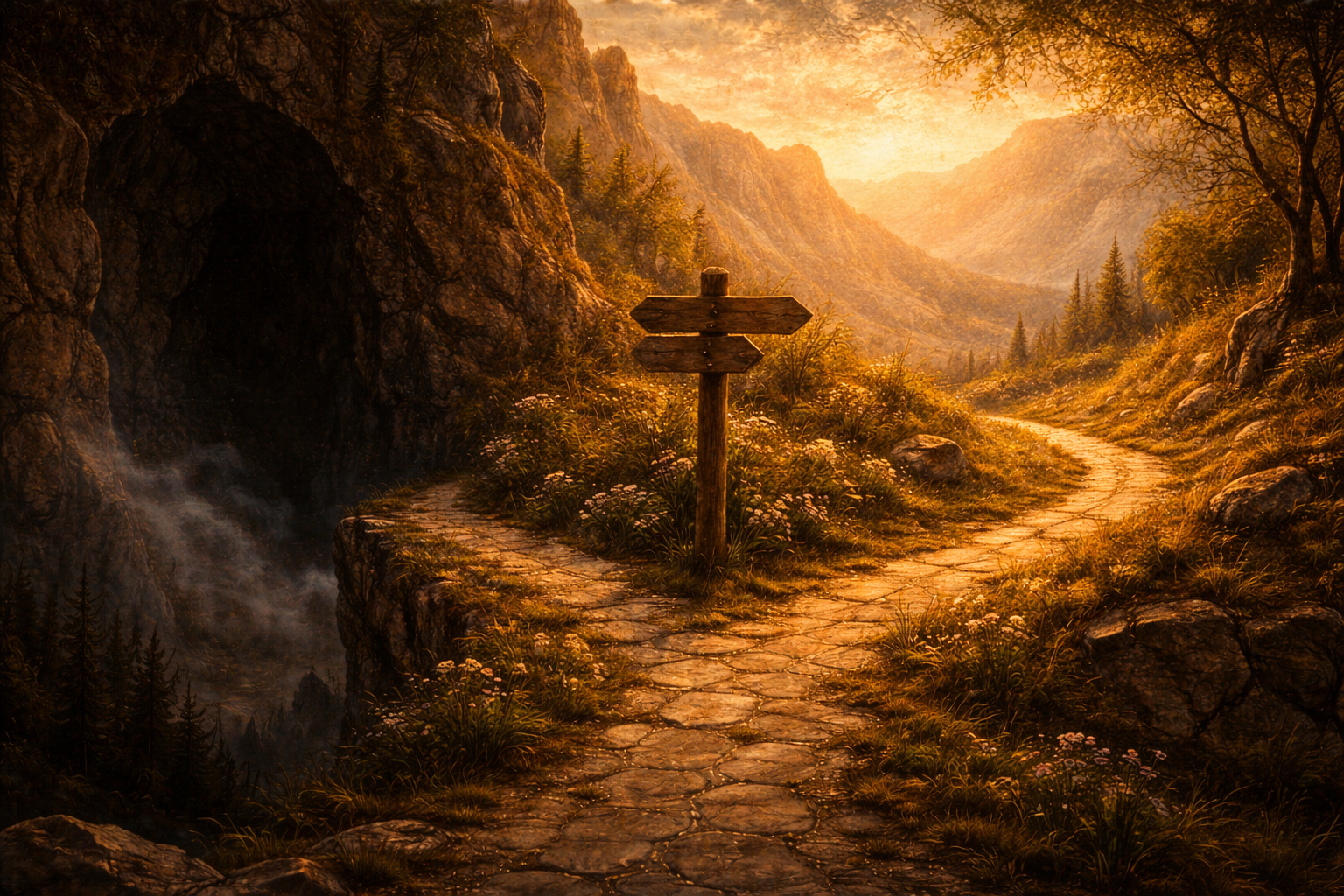
Absurdism starts in exactly the same place. Camus stares at the same void the nihilist sees. He acknowledges the silence of the universe with unflinching honesty. There is no inherent meaning. The cosmos doesn't care. You were not put here for a reason.
And then he does something the nihilist doesn't: he keeps going.
This is the crucial move. Absurdism says: the fact that the universe provides no meaning doesn't mean meaning is impossible. It means meaning is yours to create. You don't discover purpose — you build it. You don't find meaning — you make it, every day, with every choice, in every relationship, in every act of defiance against the void.
The nihilist says "nothing matters" and stops. The absurdist says "nothing matters inherently" and starts. That one word — inherently — is the difference between lying in bed and pushing the rock.
Camus understood something that nihilism misses entirely: joy in the face of meaninglessness is the most rebellious act possible. If the universe doesn't care whether you're happy, then choosing happiness is a form of defiance. If there's no cosmic reward for kindness, then being kind is an act of radical freedom. If nothing you build will last forever, then building it anyway is the ultimate creative act.
This is why we say "push the rock, smile about it." Not because we're naive. Not because we've found some secret meaning the nihilists missed. But because the smile itself is the meaning. The push itself is the purpose. The walk back down the hill — conscious, aware, undefeated — is the whole point.
In daily life, the difference looks like this:
The nihilist skips the party because "what's the point." The absurdist goes to the party because there's no point — which means the party is its own point, the laughter is its own justification, the connection with other humans is an act of mutual rebellion against the silence.
The nihilist doesn't start the project because it won't last forever. The absurdist starts it knowing it won't last forever — and pours everything into it anyway, because the making of it is where the meaning lives.
The nihilist says love is pointless because people die. The absurdist says love is miraculous precisely because people die — every moment of connection is borrowed time, and borrowed time is the most precious kind.
Nihilism is a conclusion. Absurdism is a beginning. They start in the same place — the honest recognition that the universe offers no inherent meaning — but they go in opposite directions. One lies down. One pushes the rock.
We chose the rock. We chose the smile. We chose to build meaning in a universe that never asked us to. And that choice — that daily, deliberate, joyful choice — is the most philosophical act we know.
Welcome to Sisypheanism. The rock is waiting.
From the Sisyphean Bible
The First Truth
The Indifferent Universe — the universe is silent, and that is liberating, not tragic.
Read the full doctrine →Become a Sisyphean.
Take the oath. Get your certificate. Join a community of people who push the rock and refuse to stop smiling.
Become a Sisyphean →
Discussion